Government Approves Wheat Policy 2025-26: Farmers to Receive Rs3,500 per Maund
Wheat Policy 2025-26
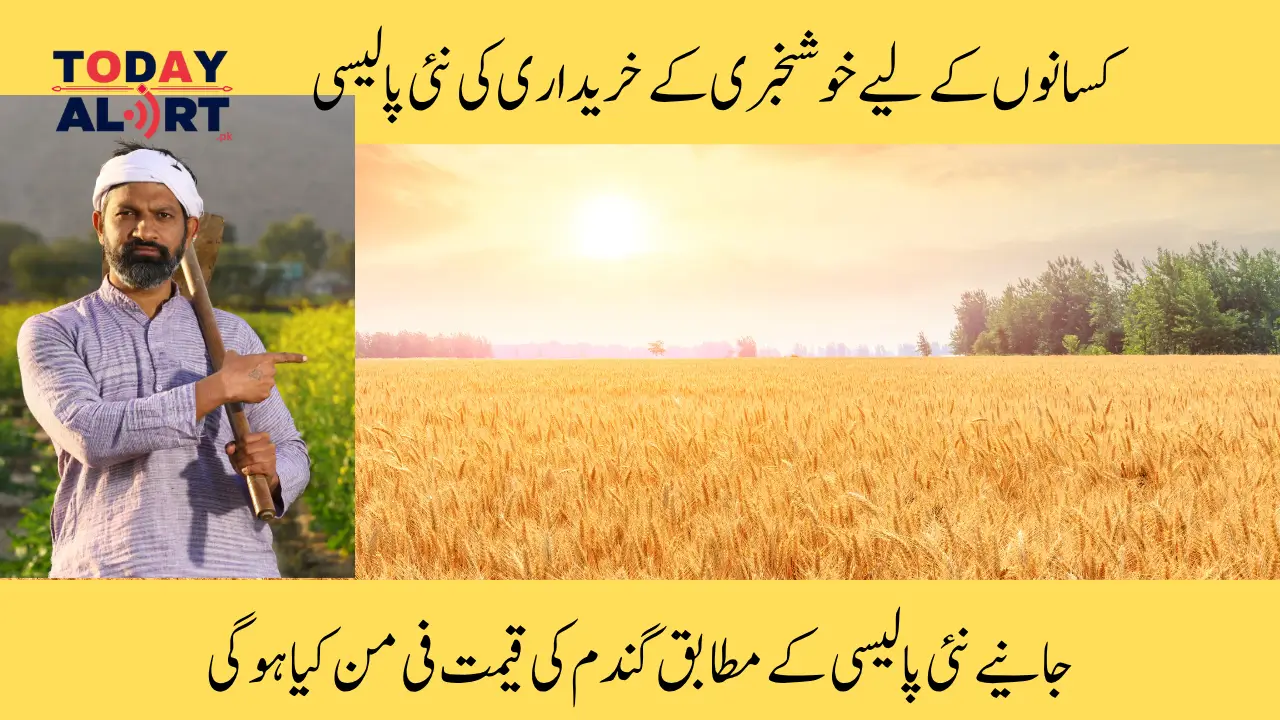
In a significant move to support Pakistan’s farmers and strengthen its agricultural sector, the government has approved the National Wheat Policy 2025-26. Under this policy, wheat will be procured from farmers at a price of Rs3,500 per maund, ensuring fair compensation and stabilizing the wheat market. This decision, announced by Prime Minister Shehbaz Sharif, marks a crucial step toward securing food security and fostering the economic prosperity of farmers across Pakistan.
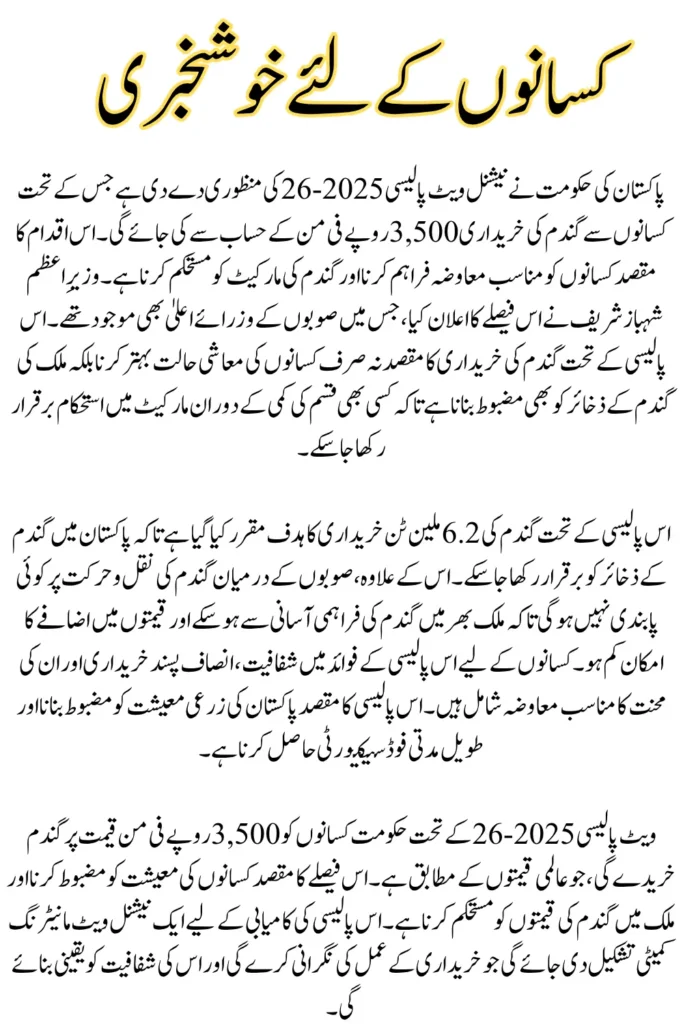
The announcement was made during a high-level meeting attended by the chief ministers of Punjab, Sindh, Balochistan, and Gilgit-Baltistan, as well as key stakeholders from various sectors. Prime Minister Shehbaz Sharif emphasized the importance of the agricultural sector to Pakistan’s economy, noting that wheat is not only the nation’s staple food but also a vital source of livelihood for millions of farmers.

Key Highlights of the Wheat Policy 2025-26
The National Wheat Policy 2025-26 aims to ensure fair compensation for farmers while strengthening strategic wheat reserves and stabilizing the wheat market. Below are the key highlights:
- Procurement Price: The government will purchase wheat from farmers at Rs3,500 per maund, which has been carefully aligned with international wheat prices to ensure that farmers receive fair profits.
- Procurement Goal: A total of 6.2 million tons of wheat will be procured from the 2025–26 crop for strategic reserves. This will ensure that Pakistan has adequate reserves to maintain market stability, especially during periods of shortage.
- No Restrictions on Interprovincial Wheat Movement: There will be no barriers on the interprovincial movement of wheat, ensuring that the commodity remains available across Pakistan at stable prices.
- Farmer-Centric Approach: The policy focuses on the welfare of farmers, ensuring that they are compensated fairly for their hard work and helping to increase their income.
Also Read: PM Laptop Scheme 2025 Phase 5 Registratrion Process and Eligibiltu Criteria
Eligibility for Wheat Procurement under the New Policy
To benefit from the new wheat procurement policy, farmers must meet certain requirements. These include:
- Farmer Registration: Farmers must be registered with the appropriate authorities or farmer organizations.
- Land Ownership: Farmers who own land are eligible for wheat procurement under this scheme. However, the policy is also designed to support small-scale farmers and ensure fair access to procurement opportunities.
- No Restrictions on Crop Size: Whether the farmer owns a large or small plot of land, the policy ensures that all farmers are eligible to benefit, provided they meet the registration criteria.
- Transparency: The government has set up mechanisms to ensure that the procurement process is transparent, and that there is no bias in the selection of farmers.
How the Wheat Procurement Process Works
The procurement process under the National Wheat Policy 2025-26 is designed to be simple, transparent, and efficient. Here’s a breakdown:
- Government Procurement: The federal government, along with provincial governments, will purchase wheat directly from farmers at the agreed price of Rs3,500 per maund.
- No Restrictions on Movement: The policy ensures that there are no restrictions on the movement of wheat between provinces, making it easier to stabilize the market and prevent price hikes in any particular region.
- National Wheat Monitoring Committee: A National Wheat Monitoring Committee will be responsible for overseeing the procurement process and ensuring its fairness and efficiency. This committee will include representatives from all provincial governments and will report directly to the Prime Minister.
- Coordination Between Federal and Provincial Governments: The federal and provincial governments will work together to ensure that wheat procurement is carried out smoothly and that strategic reserves are stocked to protect food security.
Also Read: BISP 8171 Payment Easypaisa Jazzcash Withdrawal Step by Step Guide
Expected Impact on Food Security and Market Stability
The National Wheat Policy 2025-26 is expected to have a significant impact on food security and market stability in Pakistan. Here’s how:
- Stabilizing Wheat Prices: By procuring wheat at a fair price and ensuring that there are adequate strategic reserves, the government aims to stabilize wheat prices and avoid price fluctuations in the market.
- Ensuring Adequate Supply: The procurement of 6.2 million tons of wheat will ensure that Pakistan has enough wheat reserves to meet the country’s demand, especially during lean periods or when there are global supply chain disruptions.
- Support for Farmers: The policy provides fair compensation to farmers, helping them recover production costs and improving their livelihoods. It also helps improve the economic stability of agriculture-dependent regions.
- Long-Term Food Security: The policy is designed to help Pakistan achieve long-term food security by reducing reliance on imported wheat and ensuring that farmers are encouraged to produce more wheat.
FAQs
- What is the new wheat procurement price?
- The government will procure wheat at Rs3,500 per maund, which is aligned with international wheat prices to ensure fair compensation for farmers.
- How will this policy affect food prices?
- The policy aims to stabilize wheat prices and prevent fluctuations in the market by creating strategic reserves and ensuring fair procurement.
- Who is eligible to benefit from the wheat procurement policy?
- Farmers who own land and are registered with the relevant authorities or farmer organizations will be eligible for the wheat procurement scheme.
- Will wheat movement be restricted between provinces?
- No, there will be no restrictions on the interprovincial movement of wheat, ensuring nationwide availability.
- How will the wheat procurement process be monitored?
- A National Wheat Monitoring Committee will oversee the entire process to ensure transparency, fairness, and efficiency.
Also Read: Kisan Card Phase 2 Status by CNIC Step by Step Guide




Conclusion
National Wheat Policy 2025-26 is a significant step toward ensuring food security, stabilizing wheat prices, and improving farmer livelihoods in Pakistan. By offering fair compensation to farmers and creating strategic wheat reserves, the government is taking proactive measures to address the country’s agricultural challenges. This policy marks a crucial milestone in promoting sustainable agricultural growth and ensuring the long-term prosperity of Pakistan’s farmers.
Farmers should stay informed about procurement procedures and eligibility criteria to ensure they can take full advantage of this government initiative. The future of Pakistan’s agriculture is looking brighter with the National Wheat Policy 2025-26.